
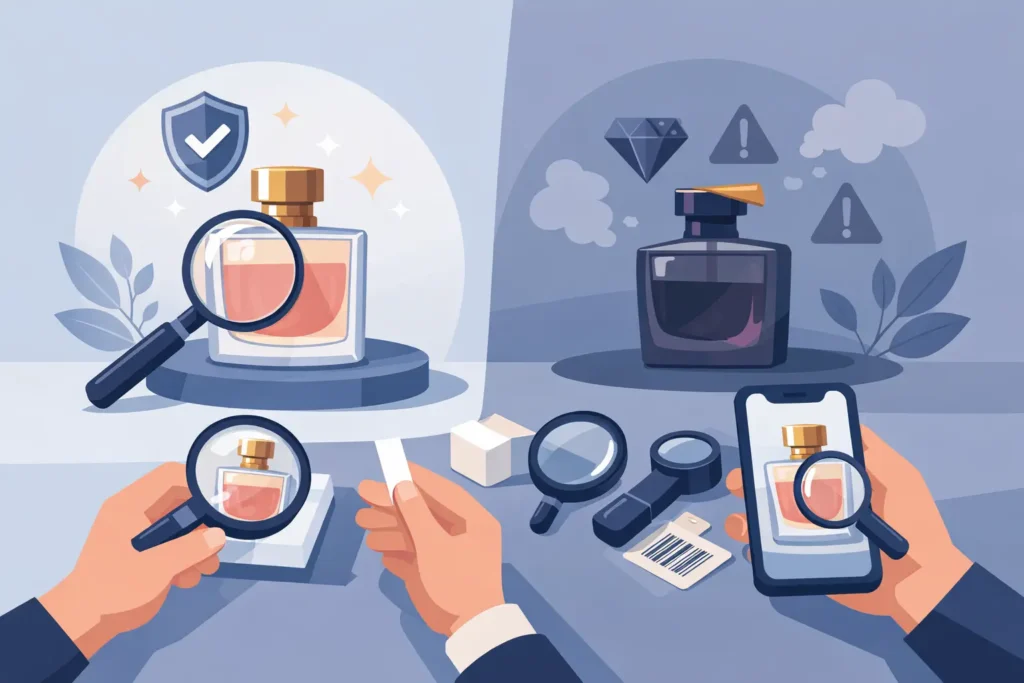
A designer fragrance should arrive with more than a beautiful bottle. It should carry the confidence of the house behind it – the precise cap, the refined atomizer, and the familiar scent that becomes part of your presence. Knowing how to tell if perfume is authentic helps protect that experience, especially when a tempting price appears on an unfamiliar marketplace.
Counterfeit perfume can look convincing in a product photo. In person, however, the details often reveal a different story. The most reliable approach is not to rely on one clue, but to assess the fragrance as a whole: where it came from, how it is packaged, how it is made, and how it wears on your skin.
How to Tell If Perfume Is Authentic Before You Buy
The first authenticity check happens before the package reaches your door. A low price alone does not mean a fragrance is fake. Legitimate retailers may offer meaningful discounts through direct sourcing, seasonal promotions, or lower operating costs than department stores. What matters is whether the seller is transparent and accountable.
Look for clear contact information, secure checkout, a defined return policy, and product descriptions that specify the fragrance name, concentration, and bottle size. Be cautious when a listing uses only stock images, vague phrases such as “inspired by,” or descriptions that avoid naming the actual brand. A seller who cannot answer straightforward questions about condition, packaging, or returns is not offering the reassurance a luxury purchase deserves.
Be equally careful with prices that seem impossible. A discontinued scent, a tester, or an older box design may cost less than current department-store stock. But a brand-new, highly sought-after bottle offered at a tiny fraction of its normal price deserves closer scrutiny.
1. Examine the Cellophane and Outer Box
Authentic perfume packaging is typically clean, precise, and consistent. If a fragrance is sold sealed, the cellophane should feel smooth and tightly wrapped, with neat folds and a professional seal. Loose plastic, excessive glue, cloudy film, or uneven seams can be warning signs.
The box itself should feel sturdy, not thin or flimsy. Check the brand name, fragrance name, concentration, and volume for sharp printing and correct spelling. Luxury houses pay attention to spacing, color, font weight, and alignment. A letter that looks slightly crooked or a logo that appears unusually bold may seem minor, but counterfeits often reveal themselves through those small production errors.
Packaging can vary by production run and region, so do not reject a fragrance solely because its box differs from an older bottle you own. Treat it as one piece of the picture.
2. Match the Batch Code
Most authentic perfumes carry a batch code on both the outer box and the bottle. It may be printed, ink-stamped, etched, or laser-marked depending on the brand. The key detail is that the codes should generally match and should look intentionally applied, not like a random sticker added afterward.
A missing code, a blurred code, or a mismatch between box and bottle deserves attention. Still, batch codes are not a final verdict on their own. Counterfeiters can copy them, and manufacturers occasionally update code formats. Use this check alongside the bottle quality, seller reputation, and fragrance performance.
3. Look Closely at the Bottle
A genuine designer bottle feels considered from every angle. The glass should be clear and evenly formed, without prominent bubbles, rough seams, sharp edges, or an off-center base. The label, if there is one, should sit straight and adhere cleanly.
Hold the bottle in natural light. Authentic bottles often have a satisfying weight for their size, though weight varies by design. What you are looking for is consistency: balanced glass, a stable base, and details that feel deliberate rather than cheaply assembled.
Pay attention to the cap as well. It should fit securely and align naturally with the bottle. Magnetic caps on fragrances designed to have them should settle into place with a smooth, confident pull. A cap that wobbles, scratches the bottle, or feels unusually light can be a useful clue.
4. Test the Atomizer and Spray
The first spray says a great deal. An authentic fragrance usually releases a fine, even mist that disperses gently across the skin. The atomizer should not sputter, leak, or produce a harsh stream unless the specific bottle design is known for a stronger spray.
The collar around the sprayer should also be clean and properly fitted. Crooked metal, visible glue, or a loose pump are not typical of a polished designer presentation. Keep in mind that a bottle damaged during shipping can have a faulty atomizer without being counterfeit, so inspect the entire fragrance before deciding.
Let the Fragrance Tell Its Story
Perfume is built in layers. A well-made eau de parfum or eau de toilette opens with top notes, moves through a heart, and settles into a base that lingers. This evolution is one of the most revealing ways to judge whether a fragrance feels true to its name.
5. Notice How the Scent Develops
A counterfeit may imitate the opening notes of a famous fragrance, because that first impression is easiest to copy. The difference often appears after ten to thirty minutes. Authentic perfume develops with dimension: bright citrus may soften into woods, florals may become warmer and more intimate, or spice may settle into amber and musk.
A fake may smell sharply alcoholic, overly sweet, flat, or strangely synthetic from beginning to end. It may disappear almost immediately or remain loud in one unpleasant note without the elegant shift you expect. Skin chemistry, weather, and nose fatigue can affect what you smell, so test on clean skin and give the fragrance time.
6. Consider Longevity, but Do Not Overstate It
Longevity is useful, but it is not a simple authenticity test. Fresh citrus, light florals, and many eau de toilettes are naturally more fleeting than rich oud, vanilla, leather, or amber scents. A genuine fragrance can wear softly, particularly on dry skin or in warm weather.
Instead of expecting every perfume to last all day, compare its performance with the concentration and note profile. If a well-known intense spray vanishes within minutes and smells unlike its usual composition, that is more concerning than a delicate cologne fading after a few hours.
7. Compare It With a Trusted Reference
If you know a fragrance well, compare the suspected bottle with one purchased from an authorized or reputable retailer. Check the bottle shape, cap, label placement, color of the liquid, and spray behavior. Then compare the scent after it has settled, not only at the first spray.
Use official brand imagery as a reference for the current bottle design, while remembering that packaging changes over time. An older bottle is not automatically wrong. Vintage and prior-edition packaging can be authentic and often holds its own kind of charm.
Common Situations That Cause Confusion
Not every unfamiliar detail means fraud. Understanding a few common scenarios can save you from unnecessary worry.
8. Testers Can Be Genuine
A tester is often an authentic fragrance intended for in-store demonstration. It may arrive in a plain box, without a decorative cap, or marked “tester” or “demonstration.” That presentation can look less luxurious, but it does not automatically change the juice inside.
The trade-off is simple: testers can offer value, but they may not be ideal for gifting or for anyone who wants the full unboxing moment. Read the listing carefully so the condition matches your expectations.
9. Older Packaging and International Stock May Differ
Fragrance houses update box art, bottle details, ingredient labels, and barcode placement. Products made for different markets can also have different regulatory text. These changes are common, particularly when comparing an older favorite with a newly purchased bottle.
What should remain consistent is the overall standard of quality. The print should be professional, the bottle should be well made, and the fragrance should perform in a way that makes sense for its composition. When several details feel wrong at once, trust that instinct and contact the seller promptly.
What to Do If You Suspect a Fake
Do not keep spraying a fragrance you believe may be counterfeit, particularly if it causes irritation, redness, or a headache. Photograph the bottle, box, batch code, and any noticeable defects. Keep the original packaging and order information, then contact the retailer with a clear description of the issue.
A reputable seller should have a direct process for reviewing concerns and explaining return eligibility. For unused products, review the return window before opening or testing further. If you purchased through a marketplace, use its buyer-protection process as soon as possible rather than waiting until the dispute period has passed.
Your fragrance should feel like a finishing touch, not a question mark. Choose sellers who treat authenticity as part of the luxury experience, and let every spray carry the confidence, memory, and personal distinction you intended to wear.