
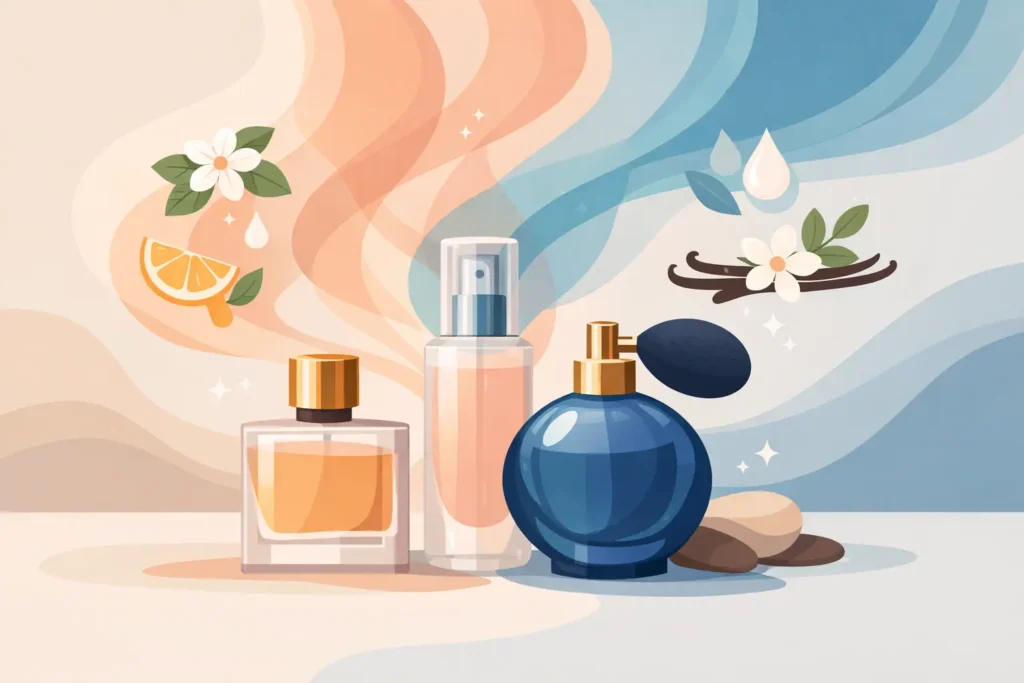
A fragrance can feel entirely different when it meets another scent on your skin. Learning how to layer perfume scents is less about wearing more and more about creating a signature that feels unmistakably yours: warm, luminous, seductive, fresh, or quietly unforgettable. The secret is restraint. A beautiful combination should leave an impression, not fill the room before you enter it.
Start With the Scent Mood You Want
Before choosing bottles, decide what you want your fragrance to say. Are you dressing for a polished workday, a candlelit dinner, a weekend escape, or a moment when you simply want to feel more like yourself? Layering works best when both scents support one clear mood.
For example, a fresh citrus or aquatic fragrance paired with clean musk creates an effortless, just-showered presence. Vanilla with amber or sandalwood feels richer and more sensual. A floral perfume becomes more sophisticated when softened by woods, while a bold spicy scent can feel brighter with a touch of bergamot or grapefruit.
You do not need two fragrances with identical notes. In fact, contrast is often what makes a pairing interesting. What matters is that they share a bridge: perhaps warm vanilla, soft musk, fresh citrus, rose, patchouli, or a woody base. That shared note gives the combination a natural flow.
Understand the Notes Before You Layer
Perfume develops in stages. Top notes are the first impression, often citrus, herbs, fruit, or airy florals. Heart notes appear after the opening settles and commonly include rose, jasmine, lavender, spices, and softer fruits. Base notes such as musk, amber, vanilla, tonka bean, sandalwood, cedar, and patchouli tend to stay closest to the skin longest.
The easiest way to layer perfume scents is to build from a lasting base to a brighter finishing fragrance. Apply the warmer, deeper scent first, then let a fresher or lighter perfume sit over it. The lighter scent brings lift; the base gives it depth and staying power.
An eau de parfum often has enough presence to serve as the foundation, while an eau de toilette can add sparkle on top. This is not a hard rule. A concentrated, intense spray may be too powerful to pair with anything except a very light scent, and a delicate floral eau de toilette may disappear beneath a heavy amber. Let the strength of each formula guide your application.
Notes That Usually Wear Beautifully Together
Some families are naturally easy to combine. Citrus, neroli, and light fruits add radiance to floral, woody, and musky perfumes. Vanilla and tonka bean bring comfort to amber, spice, coffee, and soft florals. Sandalwood and clean musk can make nearly any scent feel smoother and more skin-like.
Florals need a little more intention. Rose can be romantic with vanilla, modern with patchouli, or crisp with citrus. Jasmine becomes especially sensual beside amber or woods, but it may become overwhelming when paired with another dense white floral. When both scents are dramatic, use fewer sprays rather than abandoning the pairing immediately.
Build Your Layering Routine in the Right Order
Great layering begins before the first spray. Fragrance holds best on well-moisturized skin, and an unscented body cream gives you a neutral canvas without competing with your perfume. If you prefer a scented lotion or body oil, keep it in the same family as your fragrance: vanilla with vanilla, citrus with citrus, or a clean musk beneath almost anything.
Apply your deeper scent first. One spray on the chest or the back of the neck is usually enough. Then add the lighter fragrance to a separate pulse point, such as the wrists, inner elbows, or collarbone. Keeping the scents on nearby but distinct areas allows them to mingle naturally as your body warms them.
Avoid rubbing your wrists together. The friction can flatten the opening and makes it harder to understand how the combination is developing. Let the perfume dry on its own, then give it 10 to 15 minutes before deciding whether you need another mist.
For a softer, more intimate result, spray one fragrance on skin and mist the second lightly through the air before walking through it. This is especially useful with statement scents from houses known for rich amber, leather, oud, spice, or powerful florals. The goal is a lingering presence that invites someone closer.
Try These Designer Fragrance Layering Directions
You can layer by note family even when the fragrances come from different designers. Think of these as starting points, not rules. Skin chemistry, weather, and the concentration of each bottle will change the result.
A fresh aromatic scent in the style of Dior Sauvage can feel more polished with a clean musk or dry cedar fragrance. The bright peppery opening remains recognizable, while the second scent adds a smooth, tailored finish.
A warm, spicy scent with the confidence of a Tom Ford-inspired evening fragrance pairs beautifully with a restrained vanilla or sandalwood perfume. Apply the spicy scent first, then use only a small amount of vanilla. Too much sweetness can turn a sleek composition into something heavy.
A classic floral or aldehydic perfume in the spirit of Chanel can be made more personal with a soft skin musk. This pairing preserves the elegance of the original while giving it a close-to-the-skin warmth. It is an ideal choice for dinner, events, and occasions when you want your fragrance to feel refined rather than obvious.
For a bright, glamorous floral-fruity fragrance, layer with amber or a gentle creamy note. The result can shift from playful daytime energy to an after-dark scent with more dimension. If your floral fragrance already has a strong sweet base, choose a lighter amber rather than another gourmand perfume.
Keep the Number of Scents Low
Two fragrances are enough for most combinations. Three can work when one layer is a subtle body product, but more than that often muddies the notes and makes it difficult to tell what you are actually wearing. Your personal signature should feel intentional, not accidental.
This is also where price and bottle size matter. You do not need a large collection to experiment well. A few authentic designer fragrances across different families – one fresh, one floral, one warm, and one woody or musky – create plenty of possibilities. Luxury Scents Co. makes it easier to build that wardrobe with genuine fragrances at value-focused prices, so you can explore without treating every new scent as a gamble.
Test on Skin, Not Just on Paper
Blotters are useful for identifying notes, but they cannot tell you how a pairing will wear on you. Your skin’s warmth, natural oils, and even the climate can make vanilla sweeter, citrus sharper, or woods creamier. Test one pairing on a quiet day when you do not need to leave immediately.
Start with one spray of each fragrance. Notice the opening, then check again after 30 minutes and after several hours. Ask yourself whether the scents still feel connected. If one has vanished, use it as the first layer next time. If one dominates, reduce it to a half-spray or place it farther from the other scent.
Keep a simple note in your phone with pairings you love and the number of sprays used. It sounds practical, but it saves you from trying to recreate a perfect combination and wondering why it does not smell the same.
Let the Season Shape Your Signature
Warm weather amplifies fragrance, so fresh citrus, tea, neroli, aquatic notes, and clean musk are especially easy to wear in spring and summer. In cold weather, skin often welcomes deeper amber, vanilla, woods, leather, and spice. A pairing that feels luxurious in December may feel too dense in July.
Occasion matters, too. At the office or on a flight, keep your layers close and understated. For an evening out, you can afford more warmth and projection. If you are giving fragrance as a gift, choose a versatile scent as the anchor and invite the recipient to add their own favorite musk, floral, or citrus layer over time.
The most memorable fragrance combinations are not the loudest. They are the ones that seem to belong to the person wearing them. Trust your nose, adjust the sprays, and let each layer become part of the impression you leave behind.