
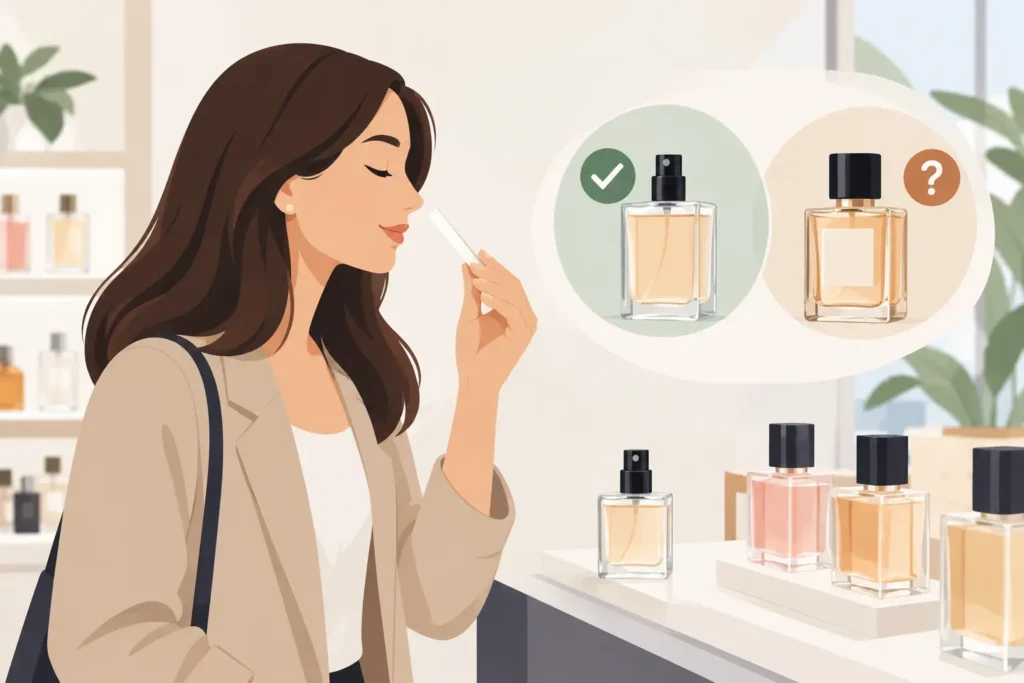
A bottle of fragrance should feel like a small luxury from the moment it arrives: the first mist, the familiar notes on your skin, the confidence of wearing a scent that feels unmistakably yours. So, are testers genuine? In many cases, yes. Authentic fragrance testers are typically made by the same brand, filled with the same fragrance, and intended to let customers experience a scent before buying a retail bottle.
The word “tester” can cause understandable hesitation, especially when a designer fragrance is offered at a noticeably lower price. But a tester is not automatically a knockoff, a diluted formula, or an inferior version. The real question is where it came from, how it is presented, and whether the seller gives you clear reason to trust the purchase.
What Is a Fragrance Tester?
A fragrance tester is a bottle produced for display and sampling in a store environment. You may have seen them on a department store counter beside the boxed bottles available for purchase. They allow shoppers to try a fragrance on skin, notice how it develops over time, and decide whether it belongs in their collection.
Because testers are created for store use rather than a gift-ready presentation, their packaging is often simpler. A tester may arrive in a plain brown or white box, an unbranded carton, or a box marked “tester” or “demonstration.” Some come without a cap. Others have the same cap as a retail bottle. These differences are about presentation, not necessarily the liquid inside.
For fragrance lovers who care more about the scent than the ribbon-ready box, a genuine tester can be a smart way to wear an iconic designer fragrance for less. It can be especially appealing when you already know and love the scent, whether that means the fresh confidence of a signature cologne or the warm, lingering trail of a favorite eau de parfum.
Are Testers Genuine From a Trusted Retailer?
Authentic testers are generally filled with the same fragrance as their retail counterparts. They are made to represent the scent faithfully at the counter, after all. A brand would have little reason to give customers a different formula when the tester’s purpose is to encourage a purchase.
Still, “tester” alone is not a guarantee of authenticity. Counterfeit sellers can use the word to explain away missing packaging, a missing cap, or a bottle that does not look quite right. That is why the reputation and transparency of the retailer matter more than a single label on a box.
A trustworthy fragrance retailer should be straightforward about what you are purchasing. If an item is a tester, the listing should make that clear and explain possible packaging differences. It should also stand behind authentic products, offer secure checkout, and provide a reasonable return process for eligible unused items. Luxury Scents Co. centers its selection around genuine designer fragrances while giving shoppers clear product details and meaningful value beyond department-store pricing.
Why Testers Cost Less
The savings on testers usually come from the parts of the product that are not the fragrance itself. Retail presentation can include a branded carton, cellophane wrap, decorative printing, a cap, inserts, and the costs associated with shelf-ready merchandising. When those extras are reduced or absent, the bottle can often be offered at a lower price.
That makes testers particularly practical for personal use. If you are buying a fragrance for yourself, you may prefer putting your budget toward the bottle and the scent rather than a box that will be recycled minutes after opening. The fragrance can still create the same personal moment: a crisp citrus opening before a morning meeting, a soft floral trace on a favorite sweater, or a deeper amber scent that stays close through an evening out.
There is a trade-off. A tester may not be the best choice if presentation is part of the occasion. For a birthday, anniversary, or holiday gift, a sealed retail bottle usually creates a more polished experience. If you collect bottles for their complete packaging, a retail version is also likely to be more satisfying.
Packaging Differences That Are Normal
Fragrance packaging varies by brand, production run, market, and bottle size, so there is no single tester look. However, several differences are common and should not be treated as automatic warning signs.
A legitimate tester may have a plain box rather than the glossy branded retail box. It may lack cellophane. It may say “not for sale” because it was originally designated for store display. It may also come without a cap, though many testers do include one.
What matters is whether the bottle itself looks consistent with the brand’s normal design and whether the seller accurately disclosed the condition. A plain carton is not proof of a fake. Neither is an absent cap. Conversely, beautiful packaging is not proof of authenticity either. Counterfeiters often focus heavily on making a first impression with a convincing box.
How to Shop Tester Fragrances With Confidence
Start by deciding what matters most for this purchase. If your priority is the fragrance, the bottle size, and a better price, a tester can be an excellent choice. If you want a sealed, giftable experience with every branded detail intact, choose the retail bottle instead.
Then look beyond the discount. An unusually low price from an unfamiliar seller can feel tempting, but it should prompt a closer look. Read the product description carefully. Does it state whether the bottle is a tester? Does it mention the cap or packaging? Are policies written clearly, including shipping and returns? Vague descriptions and evasive answers are never a good foundation for a luxury purchase.
It also helps to understand what authenticity checks can and cannot tell you. Batch codes, bottle engraving, print quality, and atomizer performance may offer useful clues, but none should be judged in isolation. Packaging can change between production years, and brands may use different manufacturing locations. A legitimate bottle can have small visual differences from an older bottle you own.
Trust the full picture instead: a credible retailer, accurate product information, realistic pricing, consistent bottle details, and a clear customer-support process. That combination offers far more assurance than trying to authenticate a fragrance based on one TikTok tip or the presence of plastic wrap.
Tester Versus Retail Bottle: Which Should You Choose?
Choose a tester when you are replenishing a scent you already adore, building a personal fragrance wardrobe, or treating yourself to a designer name at a more accessible price. A tester lets you focus on the part that becomes part of your identity: the fragrance on your skin.
Choose a retail bottle when the unboxing matters as much as the scent. The original carton, sealed wrap, and branded presentation add something special when you are giving fragrance to someone else. They also make sense for collectors who appreciate every visual detail of a house’s design.
Neither option is inherently better. They simply serve different moments. One prioritizes value and wearability; the other prioritizes presentation. Both can be genuine when purchased from a dependable source.
A fragrance is more than a bottle on a shelf. It is the scent that meets you before a big night, lingers after a meaningful conversation, and becomes part of the memory people associate with you. If a tester gives you an authentic way to make that impression for less, the missing box may be the least interesting part of the story.