
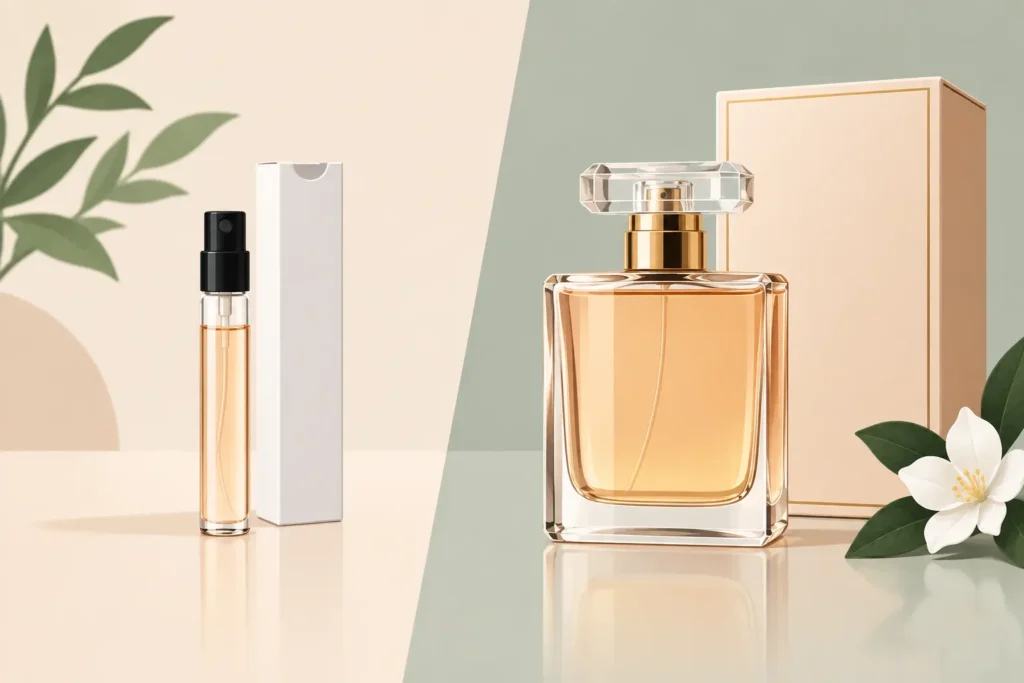
A fragrance can change the way you enter a room, remember an evening, or recognize someone you love. Yet when comparing perfume testers versus retail bottles, many shoppers pause at the same question: does the lower-priced tester smell different from the polished bottle displayed at a department store?
Usually, the answer is no. A genuine tester is generally filled with the same fragrance as its retail counterpart. The difference is most often found in the presentation, not the perfume itself. Still, packaging, condition, gifting plans, and where you buy all matter when choosing the bottle that belongs on your vanity.
What Is a Perfume Tester?
A perfume tester is a bottle produced by a fragrance brand for in-store demonstration. It allows customers to experience a scent on skin before committing to a full-size purchase. You may see testers on fragrance counters for iconic releases from Dior, Versace, Calvin Klein, Tom Ford, and more.
Because their purpose is practical, testers are commonly packaged more simply than retail bottles. They may arrive in a plain box, a box marked “tester” or “demonstration,” or without the decorative cellophane wrap associated with a standard retail package. Some have a cap, while others may come without one.
A tester is not the same thing as a sample or travel spray. It is typically a full-size bottle, often in the same size and bottle design as the retail version. The key distinction is that it was intended for display and sampling rather than shelf presentation.
Perfume Testers Versus Retail Bottles: The Real Difference
For authentic products, the liquid inside a tester and the liquid inside a retail bottle are generally the same fragrance, concentration, and formula. A Dior Sauvage eau de toilette tester, for example, should deliver the same fresh, magnetic character as the equivalent retail bottle from the same production period. A tester does not automatically contain a stronger formula, a weaker formula, or a diluted version.
The assumption that testers are stronger is one of fragrance’s most persistent myths. It may come from the fact that store testers have been exposed to air, light, and frequent spraying, which can make their opening feel different from a newly opened bottle. It may also come from memory. When you test a fragrance under bright store lights, surrounded by dozens of other scents, your perception is not always the same as when you wear it quietly for a full day.
There can be small variations between bottles because fragrances are produced in batches and brands occasionally reformulate a scent over time. Those changes are not unique to testers. A retail bottle and tester made in the same batch should be closely aligned; bottles made years apart may smell slightly different regardless of their packaging.
Retail Bottles Offer the Full Presentation
A retail bottle is designed for the complete luxury experience. It usually arrives in a branded box with the intended artwork, protective insert, cap, and cellophane seal. From the first unwrapping to the final spray, it feels considered and ceremonial.
That presentation matters when fragrance is a gift. The shine of a sealed Chanel box or the sculptural presence of a premium Tom Ford package adds anticipation before the recipient ever smells the fragrance. For birthdays, anniversaries, holidays, or a first impression that deserves extra care, a retail bottle is often the better choice.
Retail packaging also offers reassurance to shoppers who prefer an untouched, factory-sealed item. It can be especially appealing to collectors, buyers who display their bottles, or anyone who wants every detail of a designer purchase to feel pristine.
Testers Put the Focus on the Scent
A tester is ideal for the fragrance lover who values what happens after the spray. If you are replenishing a signature scent for yourself, wearing it daily, or building a wardrobe of scents for different moods, the outer box may not be the part you remember.
Choosing a tester can mean enjoying the same recognizable fragrance experience with less emphasis on presentation. The trade-off is straightforward: you may receive a plain box, no cellophane, or no cap. If those details do not affect how you wear and enjoy the fragrance, a tester can be an appealing value.
Not every fragrance is available as a tester, and tester availability can shift quickly. It depends on brand supply, bottle size, and the inventory released into the market. A retailer should describe the condition clearly so you know whether a cap, branded box, or sealed packaging is included.
Are Perfume Testers Authentic?
They can be, but authenticity depends on the seller, not simply on the word “tester.” The fragrance category attracts counterfeits because recognizable bottles and lower prices can make an offer look tempting. A vague listing, unusually low price, poor product photos, or unclear fulfillment information should make any shopper cautious.
An authentic tester should have the quality details you expect from a genuine designer fragrance: a properly made bottle, clean printing, a working atomizer, and fragrance that develops naturally from top notes through drydown. Batch codes may appear on the bottle and packaging when packaging is included, although code formats vary by house and production run.
The most dependable path is buying from a retailer that stands behind the authenticity of its inventory and provides clear product details, secure checkout, responsive support, and a defined return policy. A lower price should feel like smart shopping, not a reason to second-guess what arrives at your door.
At Luxury Scents Co., the promise is simple: authentic fragrance should be within reach. Whether you choose a standard retail bottle for its presentation or shop a value-minded option when available, confidence in the source is part of the luxury experience.
Which Option Should You Choose?
Start with the occasion. If the bottle is a gift, a retail bottle is usually worth the added cost because the packaging becomes part of the moment. The recipient gets the visual pleasure of the brand’s design along with the scent itself.
If you are purchasing for personal wear, ask yourself whether the box and cap truly matter to you. Someone who reaches for Versace Bright Crystal every morning or keeps a favorite cologne in a gym bag may care far more about the fragrance and bottle size than the outer presentation.
Your storage habits can also influence the decision. A cap helps protect the atomizer from dust and can make a bottle look more finished on a dresser, though it does not make or break a fragrance’s longevity. The most meaningful protection is storing any perfume away from heat, direct sunlight, and dramatic temperature changes. A cool, dark drawer or cabinet will preserve the scent more effectively than a sunny bathroom counter.
Questions to Ask Before Buying a Tester
Before adding a tester to your collection, read the listing with the same care you would use when choosing a new scent. Confirm the size and concentration, whether it includes a cap, and how it will be packaged. “Tester” should never be used as a catch-all phrase that leaves condition unclear.
Also consider the seller’s policies. Fragrance returns are often limited once a product has been opened or used for hygienic and resale reasons, so it is wise to verify the bottle format before ordering. When you know exactly what you are receiving, there is no mystery – only the pleasure of a fragrance that feels distinctly yours.
A retail bottle makes a beautiful statement before the first spray. A tester keeps the spotlight on the scent that lingers after you leave. Choose the version that fits the moment, then wear it with the confidence of someone who knows their signature is unforgettable.